
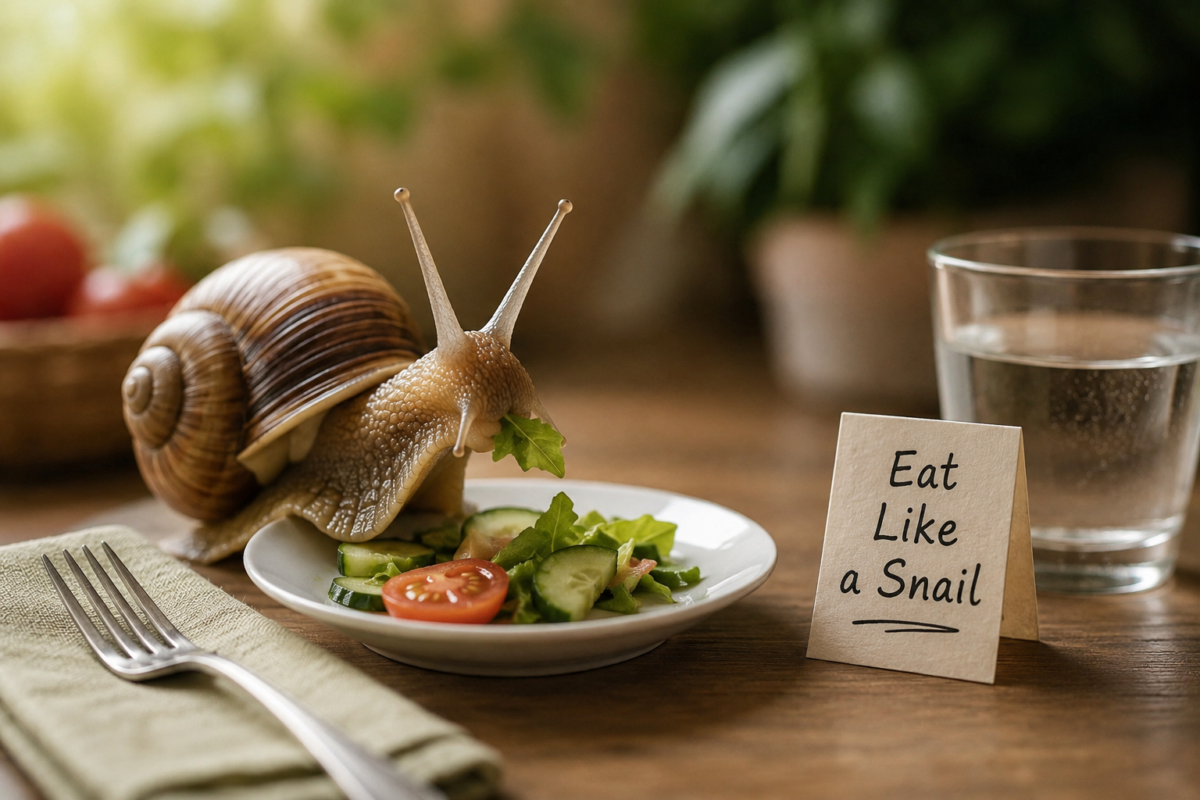
Eat Like a Snail: The Benefits of Slowing Down While Eating
Does Your Eating Style Come From Childhood?
 Does the way you eat reflect how your family ate when you were growing up?
Many eating habits develop during childhood and continue into adulthood. For example, some people learn to eat quickly because meals were rushed. Others learn to ignore their body’s signals because they were encouraged to finish everything on their plate.
Naturally thin individuals are often more in tune with their bodies when it comes to food consumption. They tend to recognize hunger and fullness cues more easily than those who struggle with dieting or weight concerns.
Why Eating Slowly Matters
When you listen to your body, you can recognize the message that says, “I’ve eaten enough.” However, research suggests that food signals can take longer to reach the brain as a person becomes heavier.
As a result, fast eaters often consume more food than their bodies actually need.
A slower eating pace allows your brain enough time to receive fullness signals. Consequently, you may feel satisfied with less food.
A New Tool for Mindful Eating
Maclean’s magazine published an article called Eat Like a Snail in its April 12, 2010 issue. The article discussed a device called SMARTBITE.
This oral device encourages smaller bites and more thorough chewing. As a result, users naturally slow down while eating.
Although gadgets may help, lasting change often begins with awareness.
Bringing Mindfulness to the Table
In my work with clients who struggle with emotional eating and binge eating, awareness is the first step toward change.
Changing emotional eating does not mean giving up your favourite foods forever. It also does not mean following strict diets or living with constant deprivation.
Instead, it means enjoying food with intention and attention.
Relearning Your Body’s Signals
As children, many of us heard phrases such as:
- “Don’t play with your food.”
- “Finish what’s on your plate.”
- “If you don’t eat your vegetables, you can’t have dessert.”
These messages may have taught us to ignore our natural hunger and fullness cues.
Naturally thin people often remain connected to these signals because they never learned to override them.
Fortunately, mindfulness can help you reconnect with your body’s wisdom.
Engage All Your Senses
The next time you eat, slow down and engage all your senses.
Notice the texture, aroma, temperature, colours, and presentation of your food. Take smaller bites and chew thoroughly.
You may discover that some foods lose their appeal when you eat them slowly. Fast food, for example, may taste overly greasy or excessively sweet.
At the same time, you may find greater enjoyment in smaller portions of higher-quality food.
What Do You Really Need?
As you rebuild the connection between your brain and your body, you may begin making food choices based on genuine nutritional needs.
Pause and ask yourself an important question:
“What do I really need right now?”
Sometimes the answer is food. However, the answer may also be a hug, a walk in the park, a few minutes of rest, or support from a trusted friend.
Learning the difference can be a powerful step toward healthier eating and greater emotional well-being.
Of course, what a great site and informative posts, I will add backlink – bookmark this site? Regards, Reader.
Nice post…Thank you for sharing some good things!!
One again, your idea is very
good.thank you!very much.